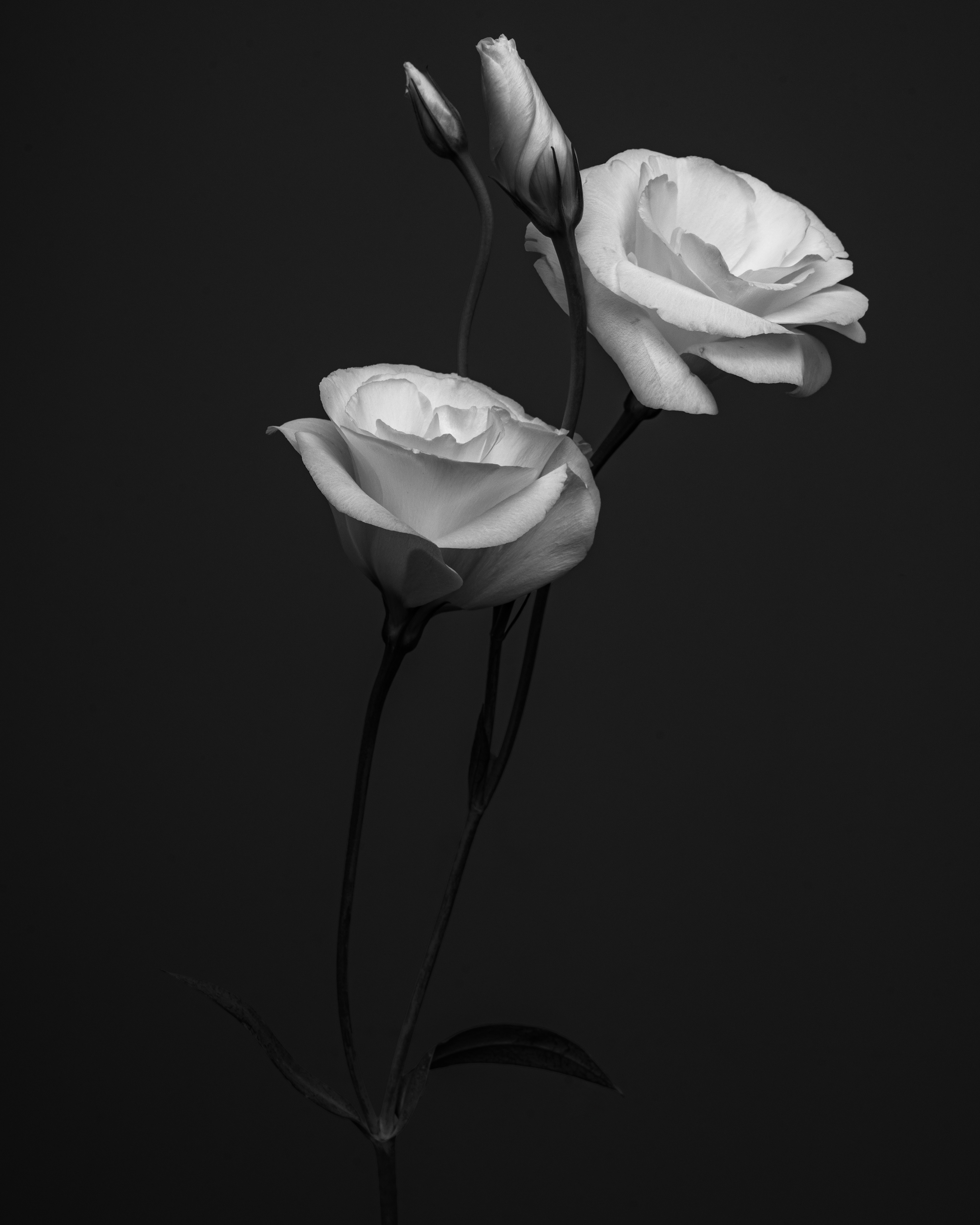
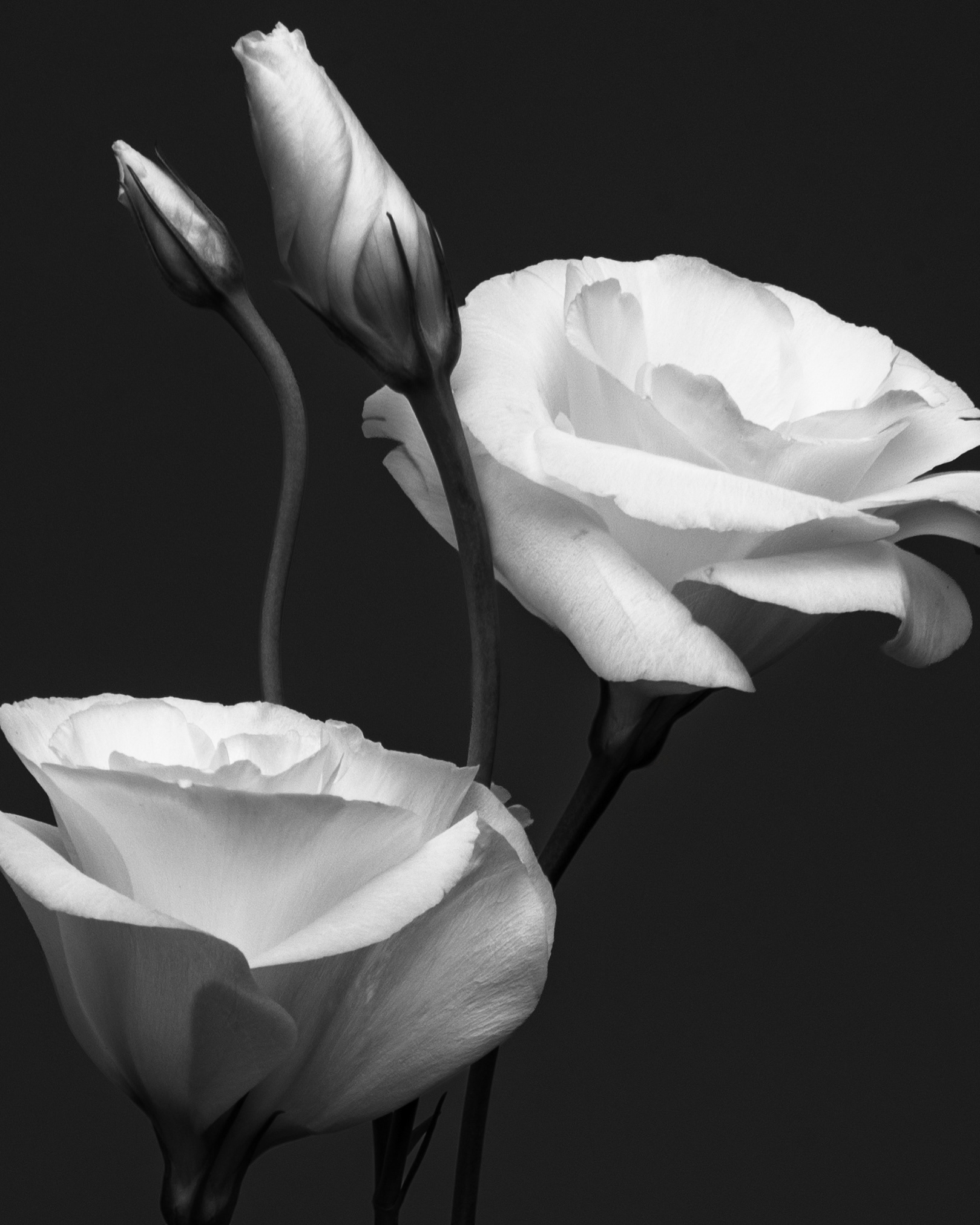
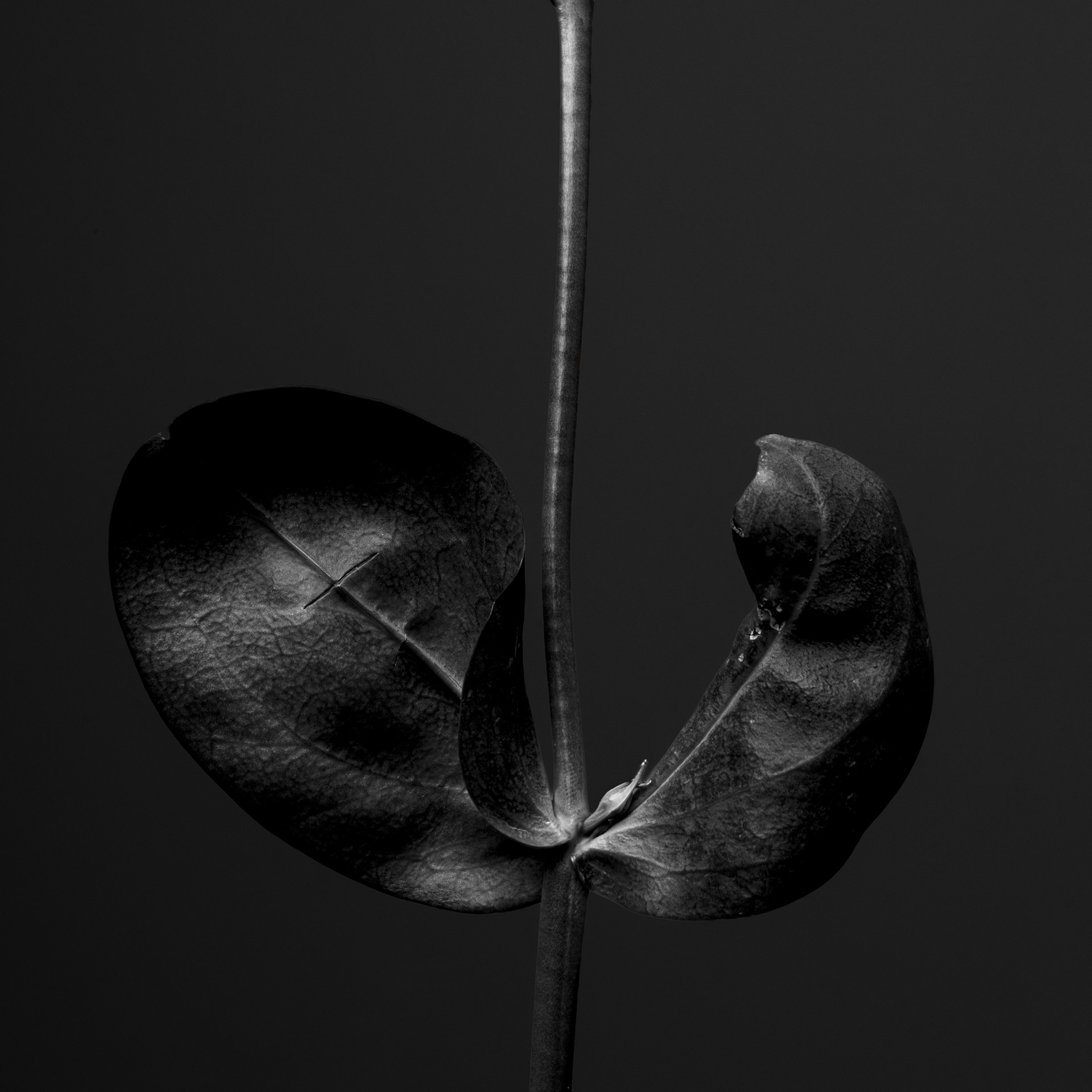
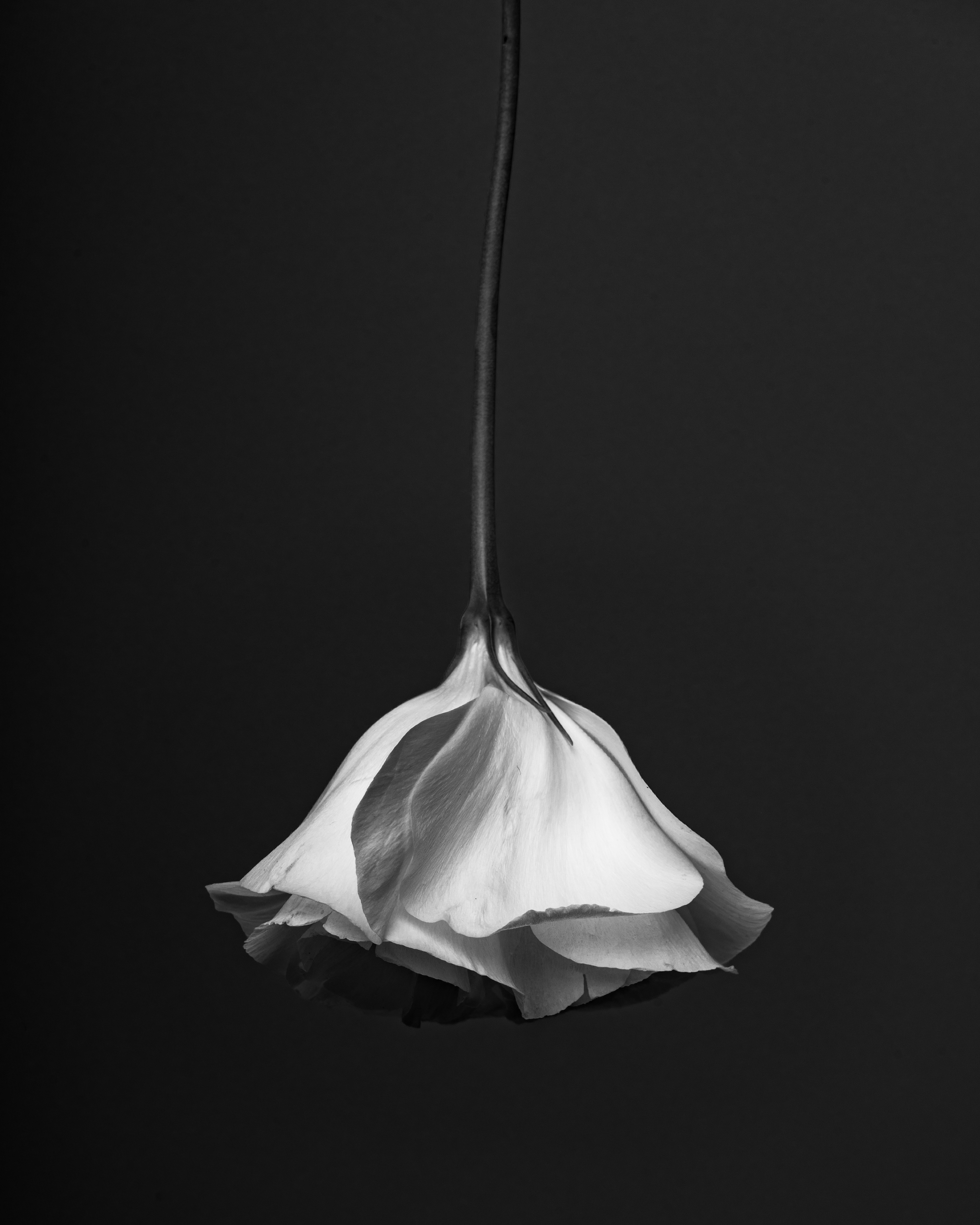
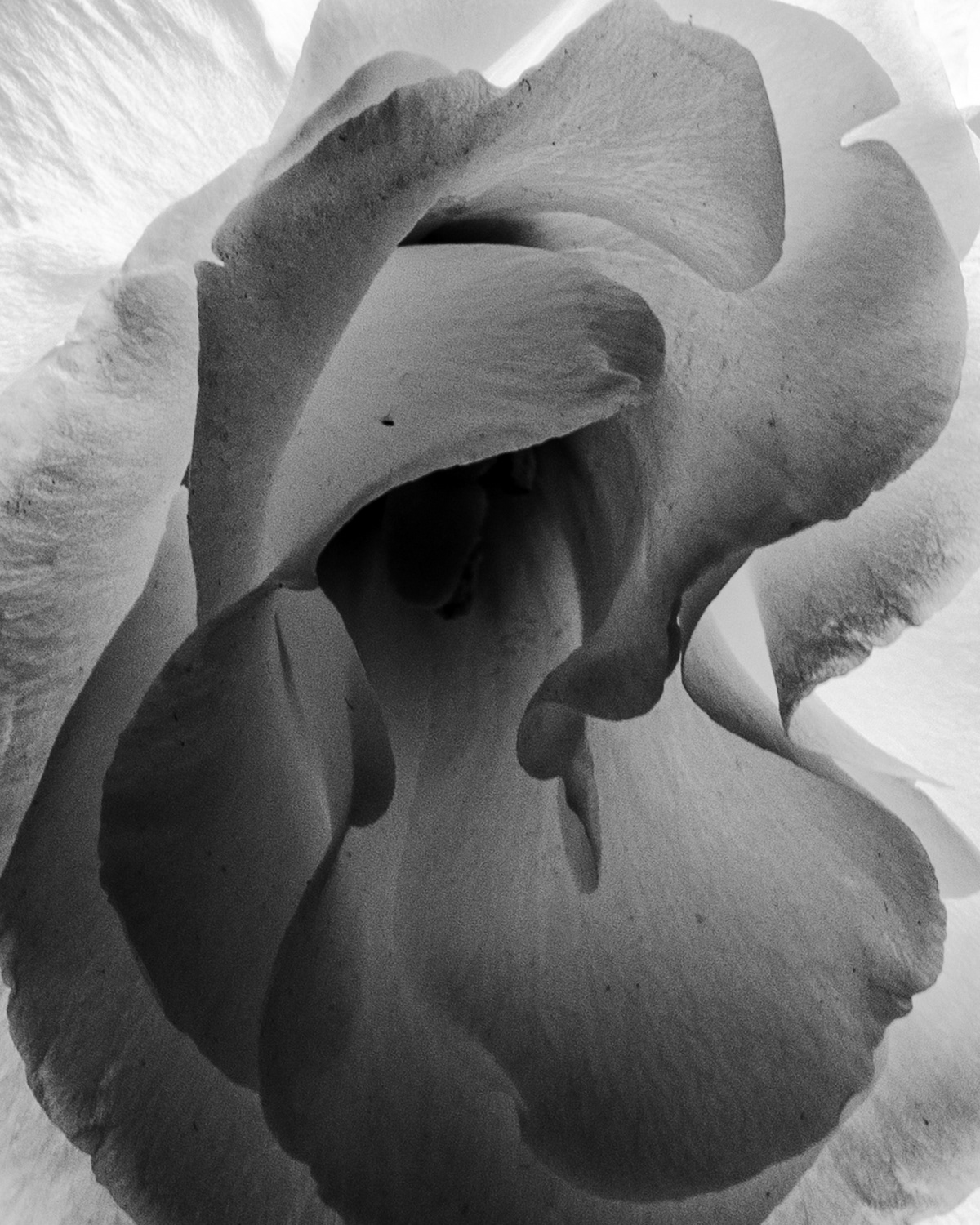
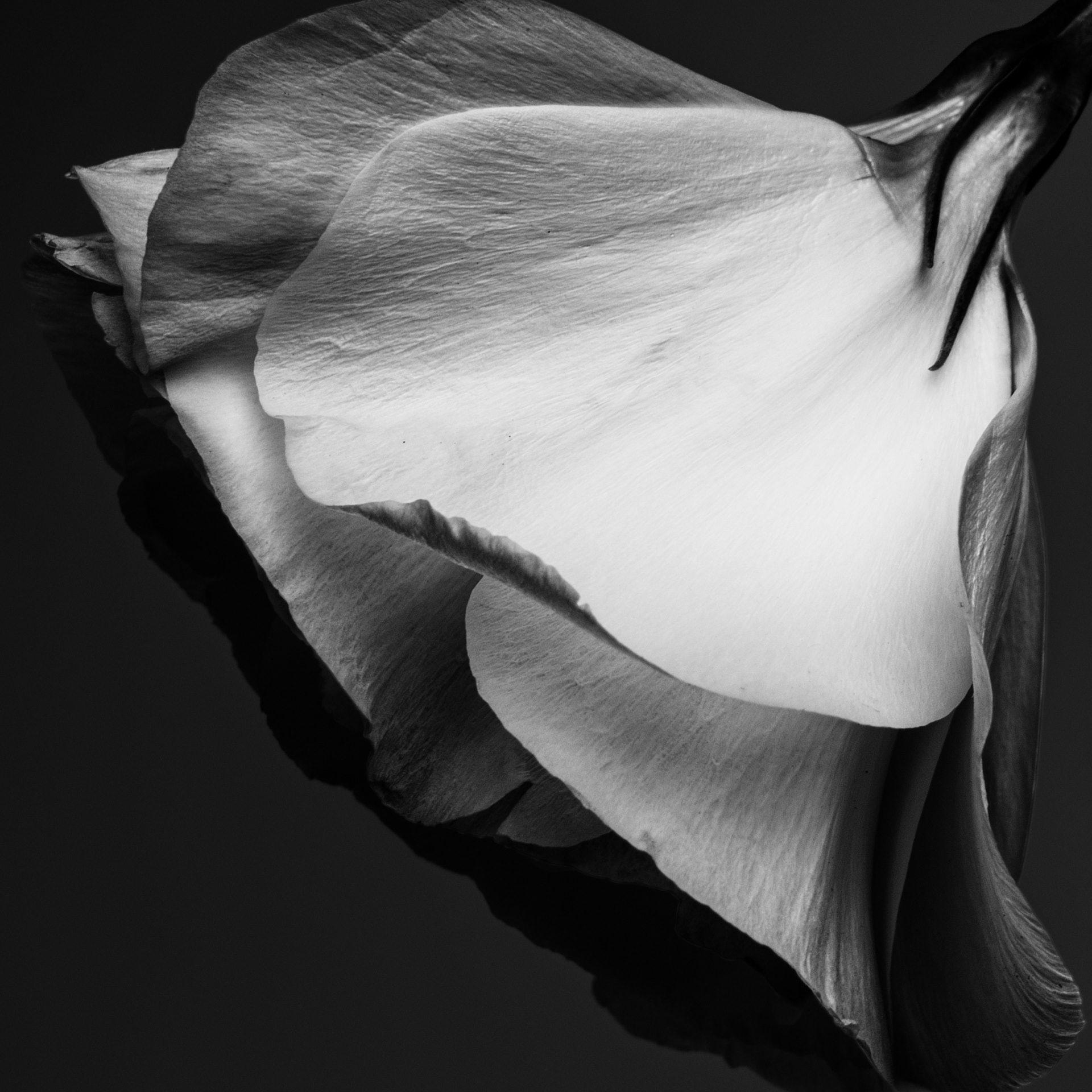
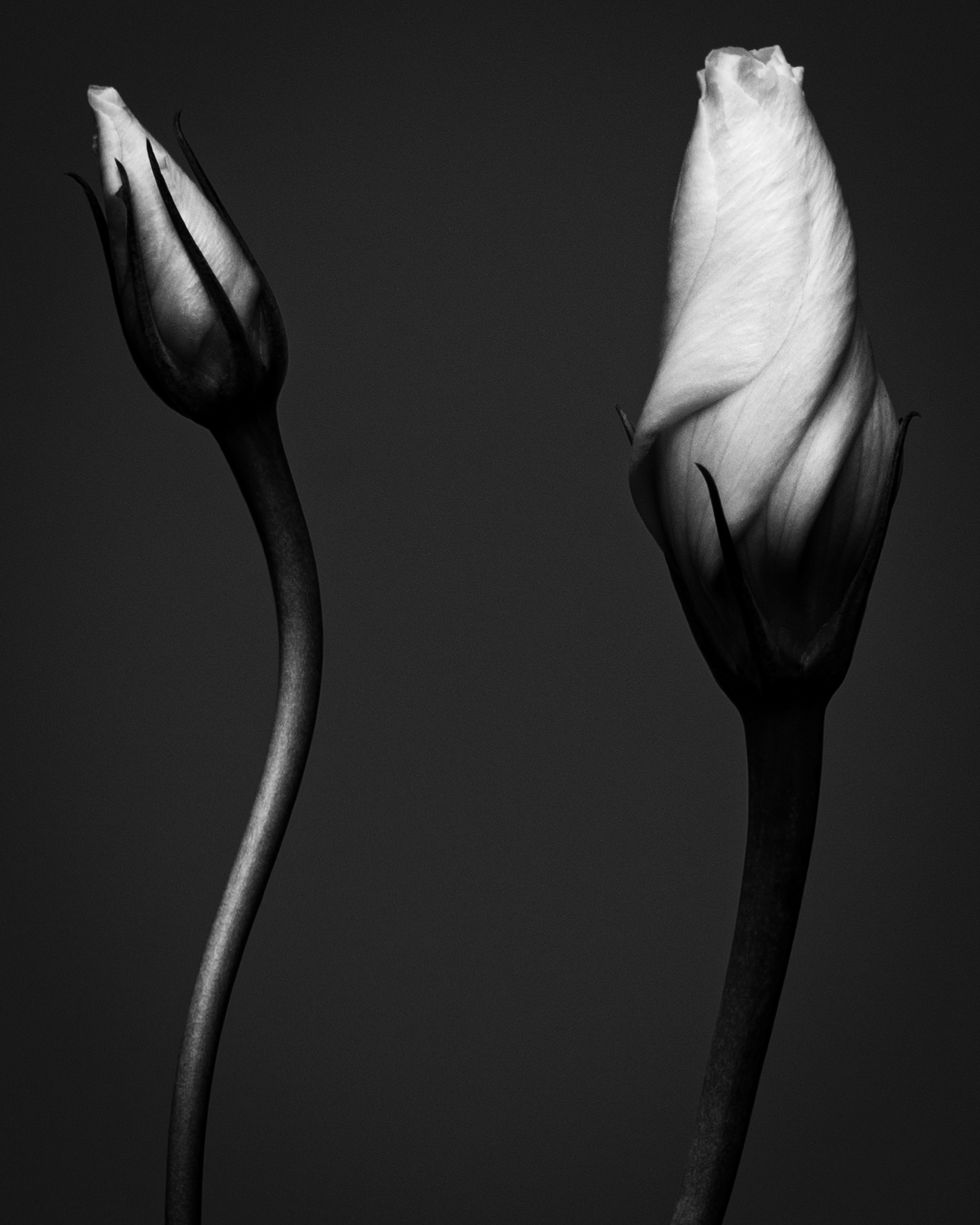
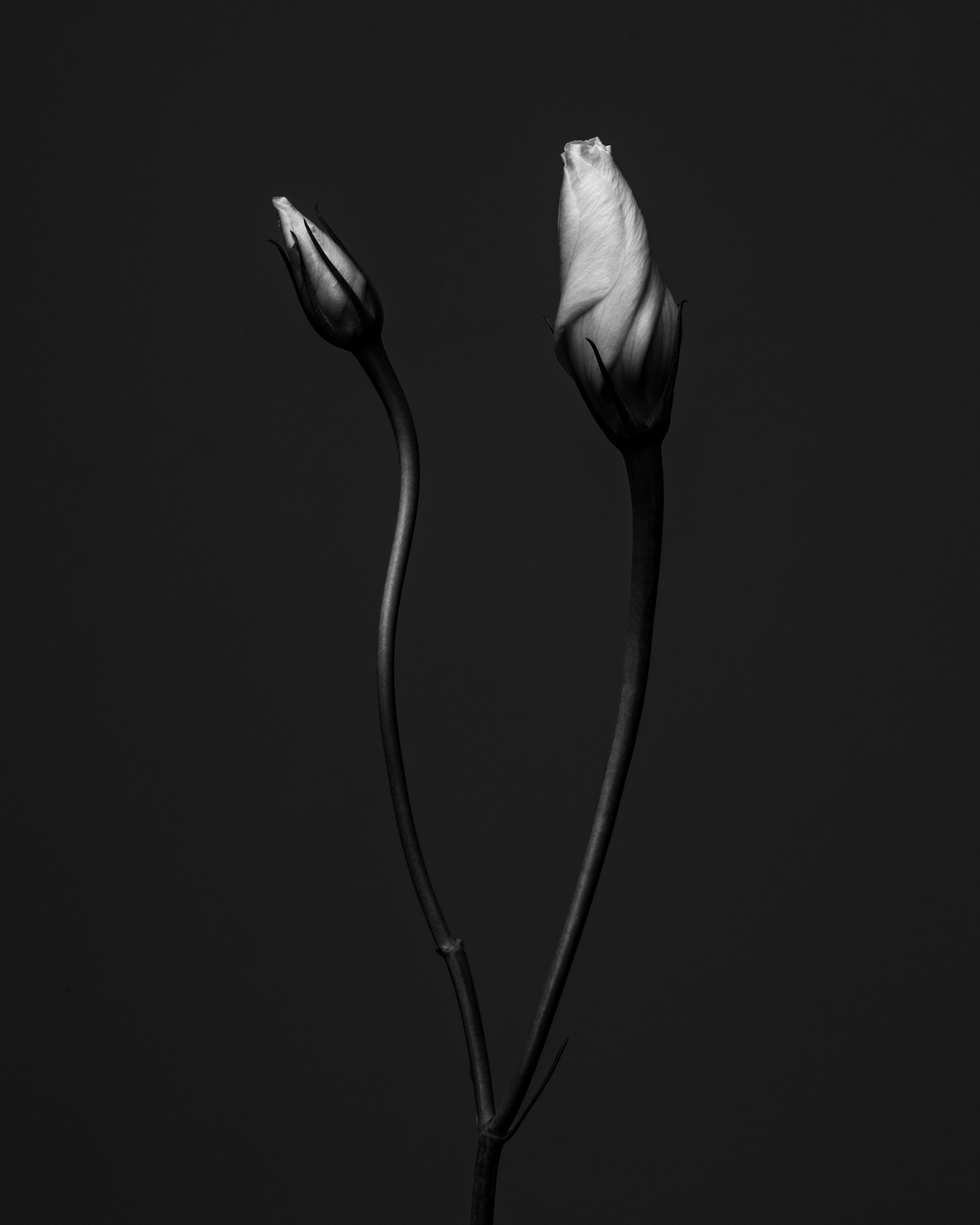
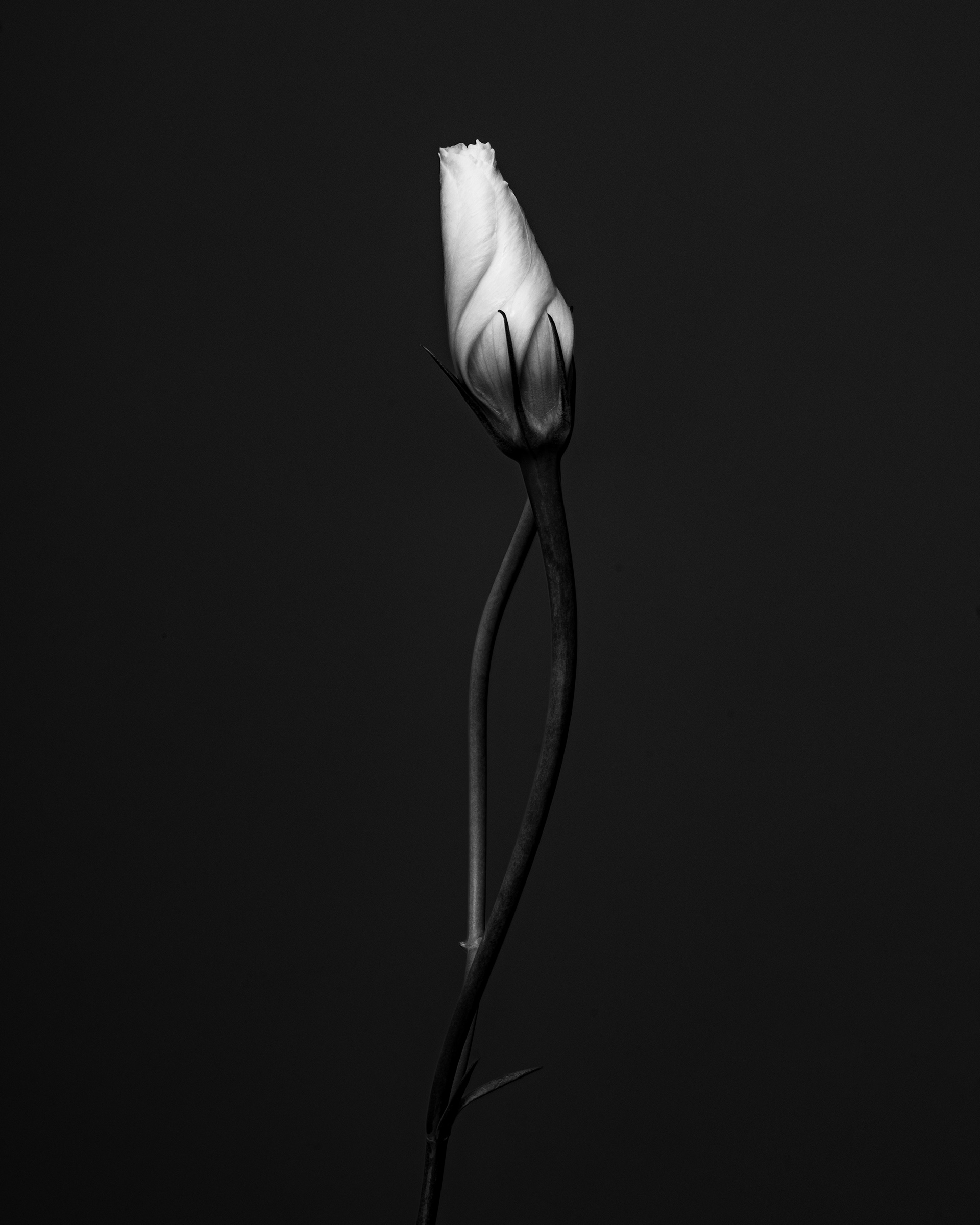
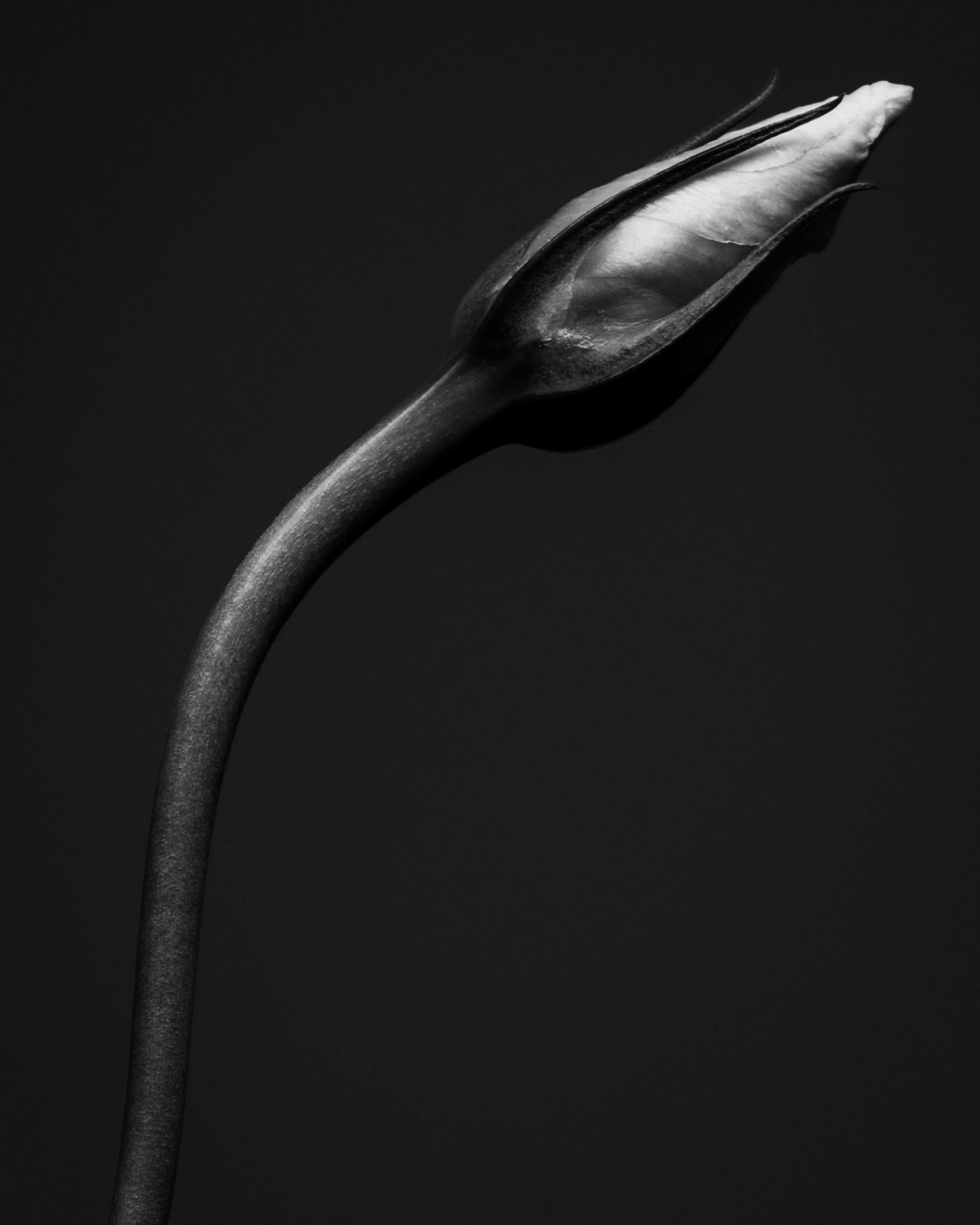
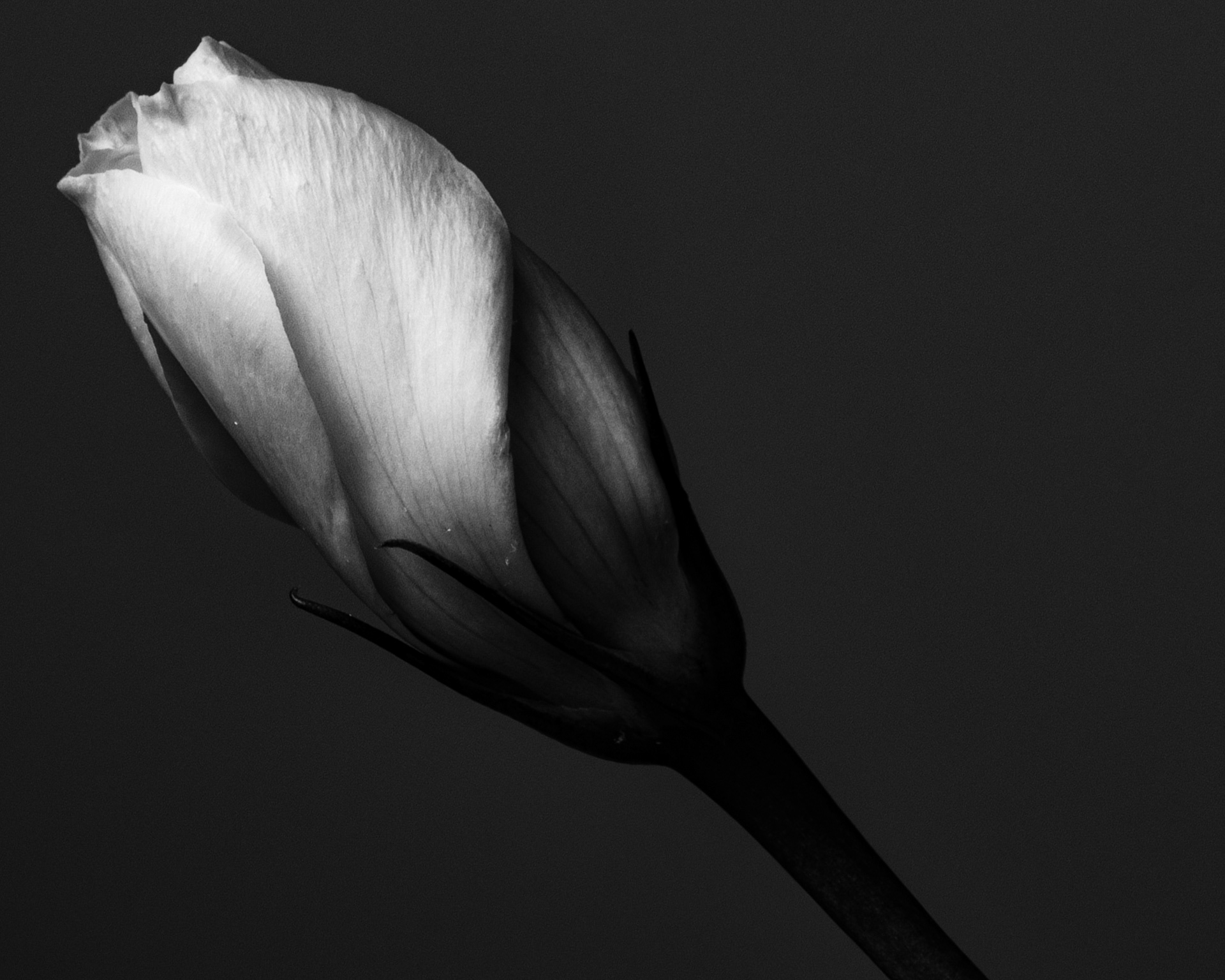
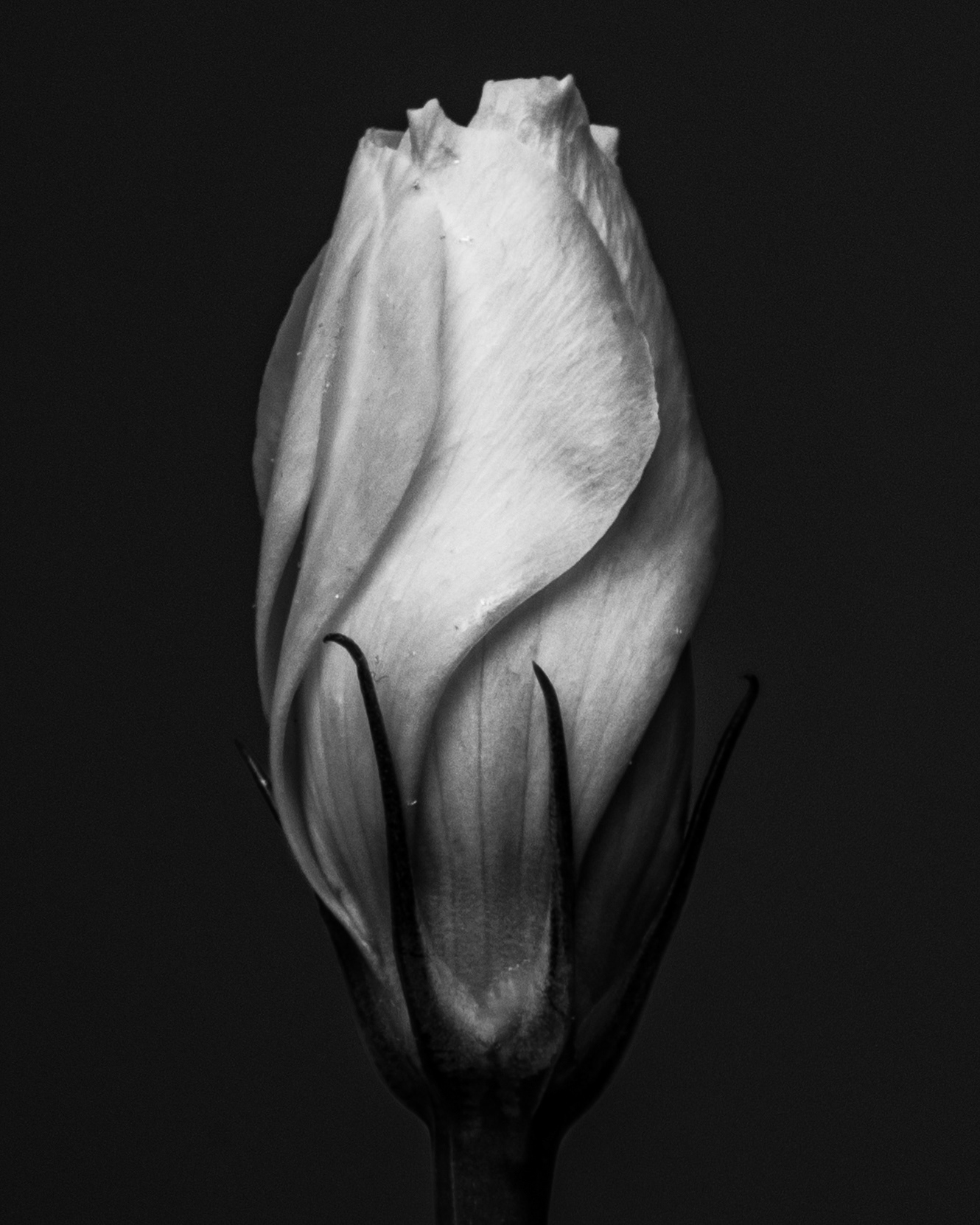
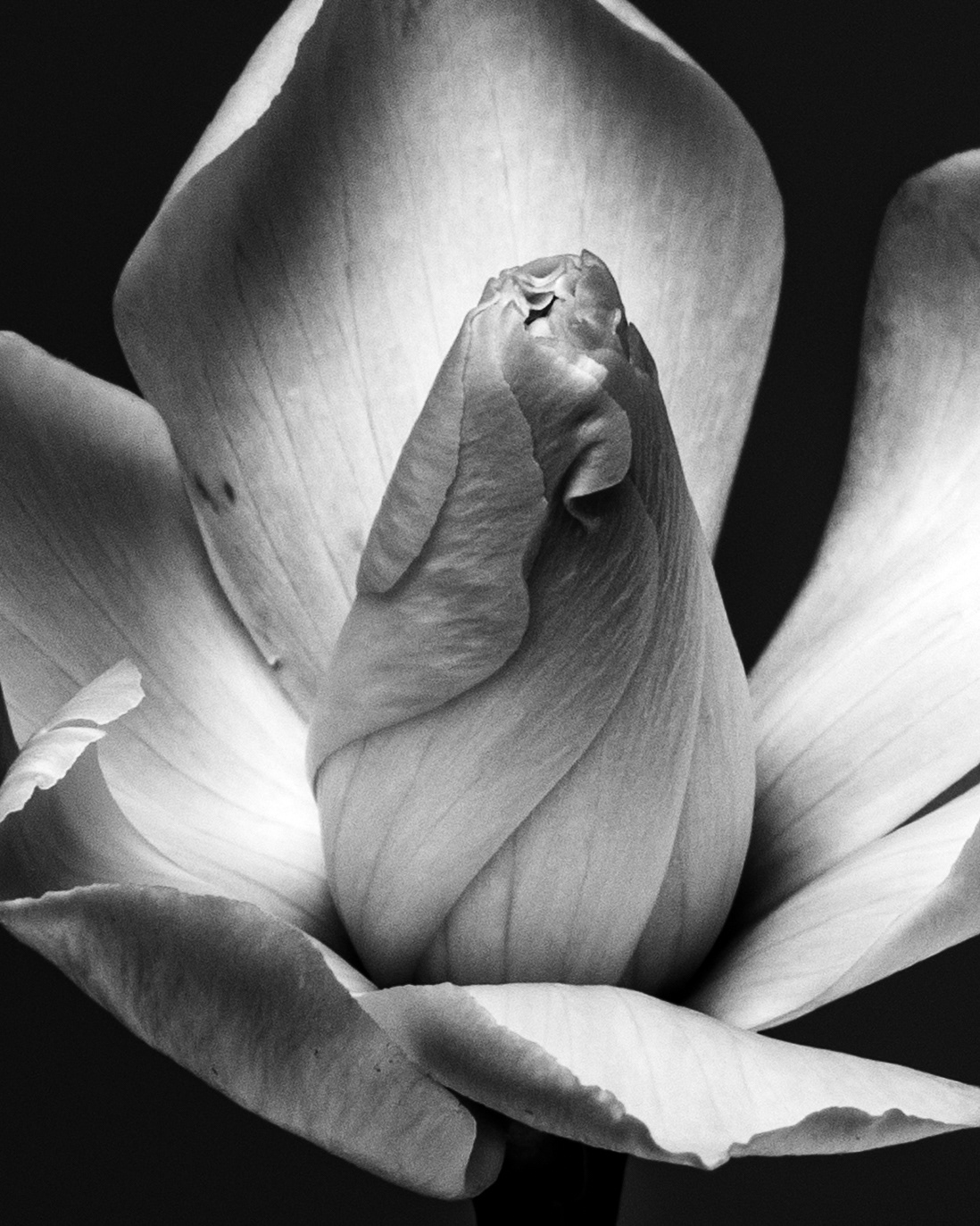
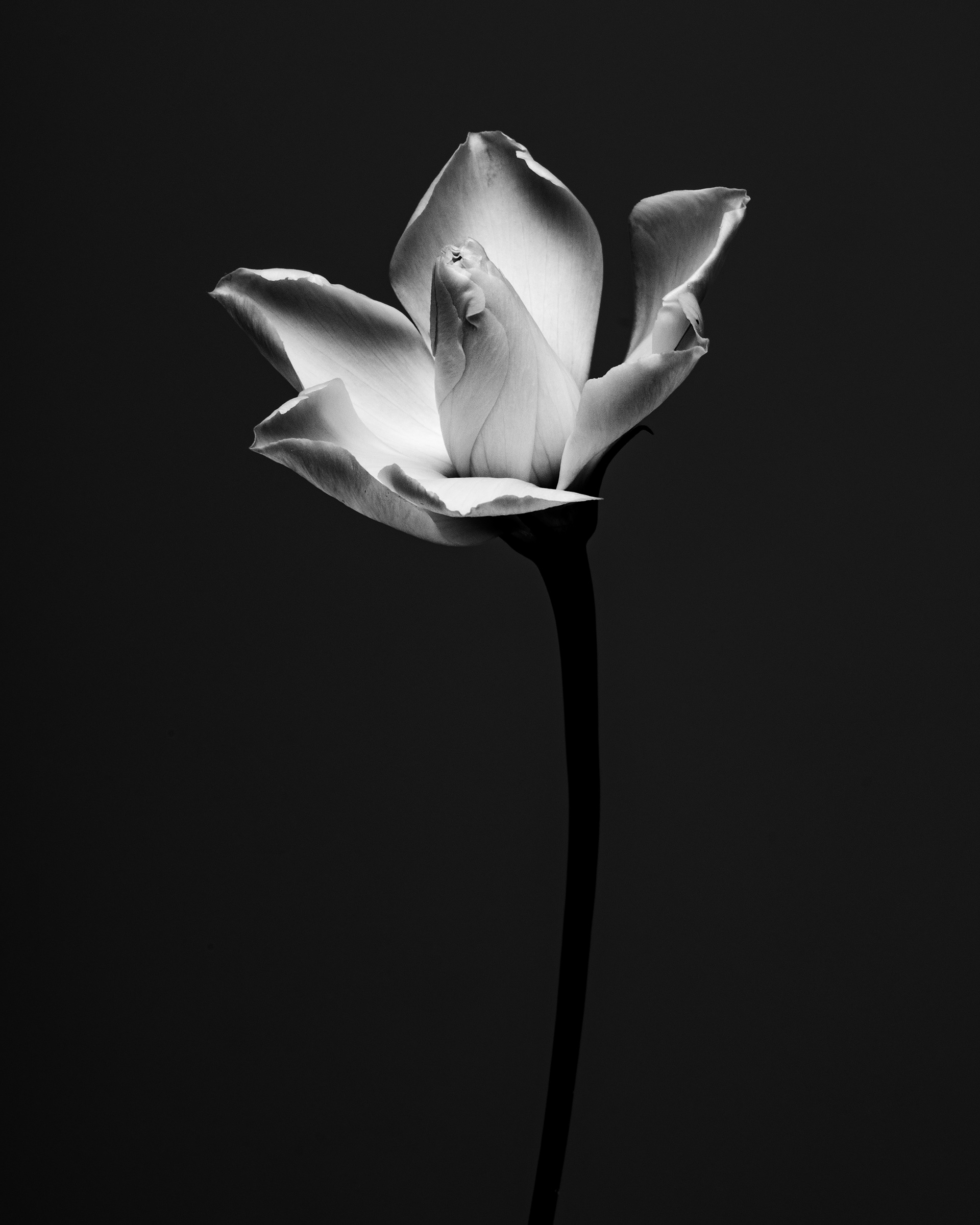
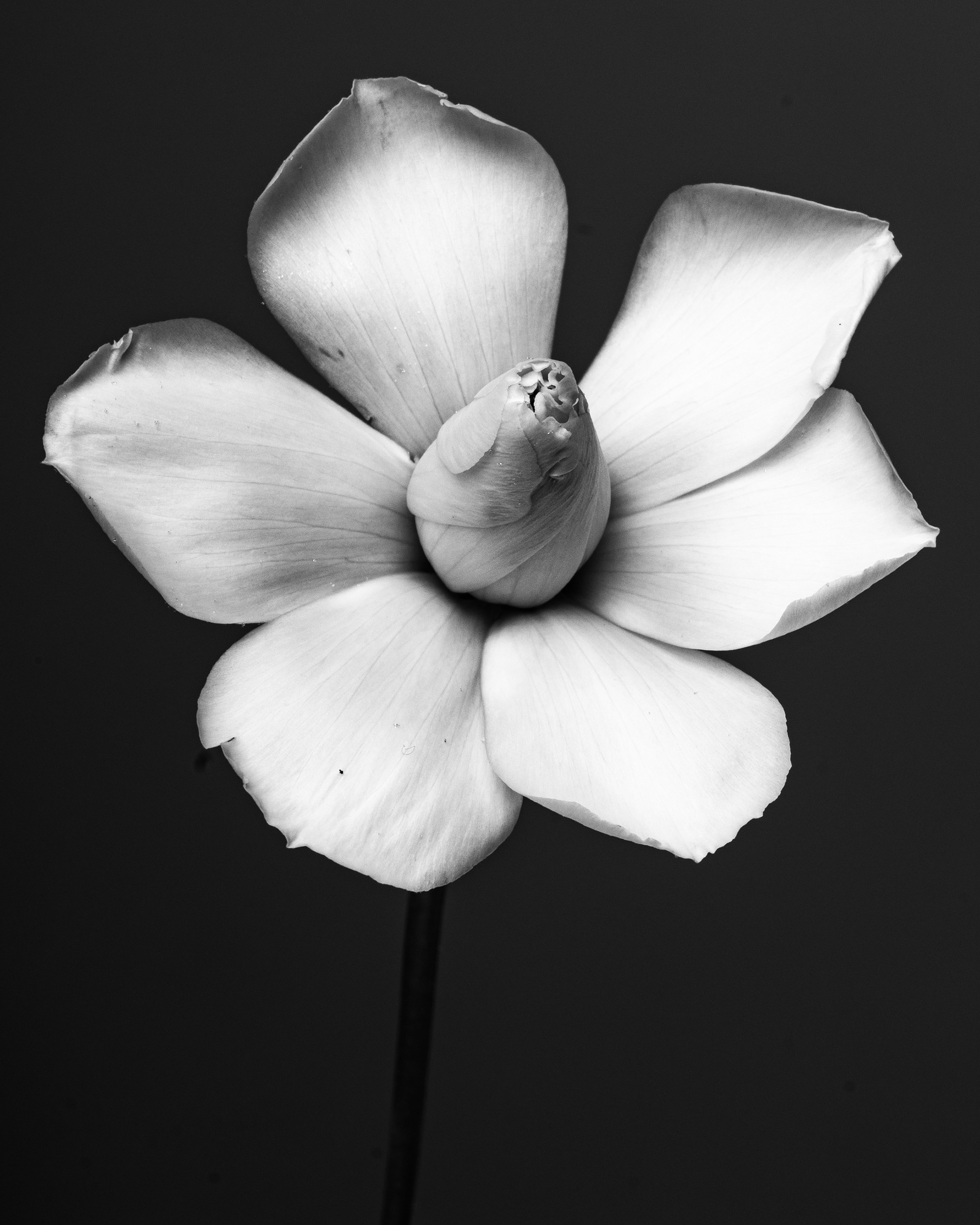
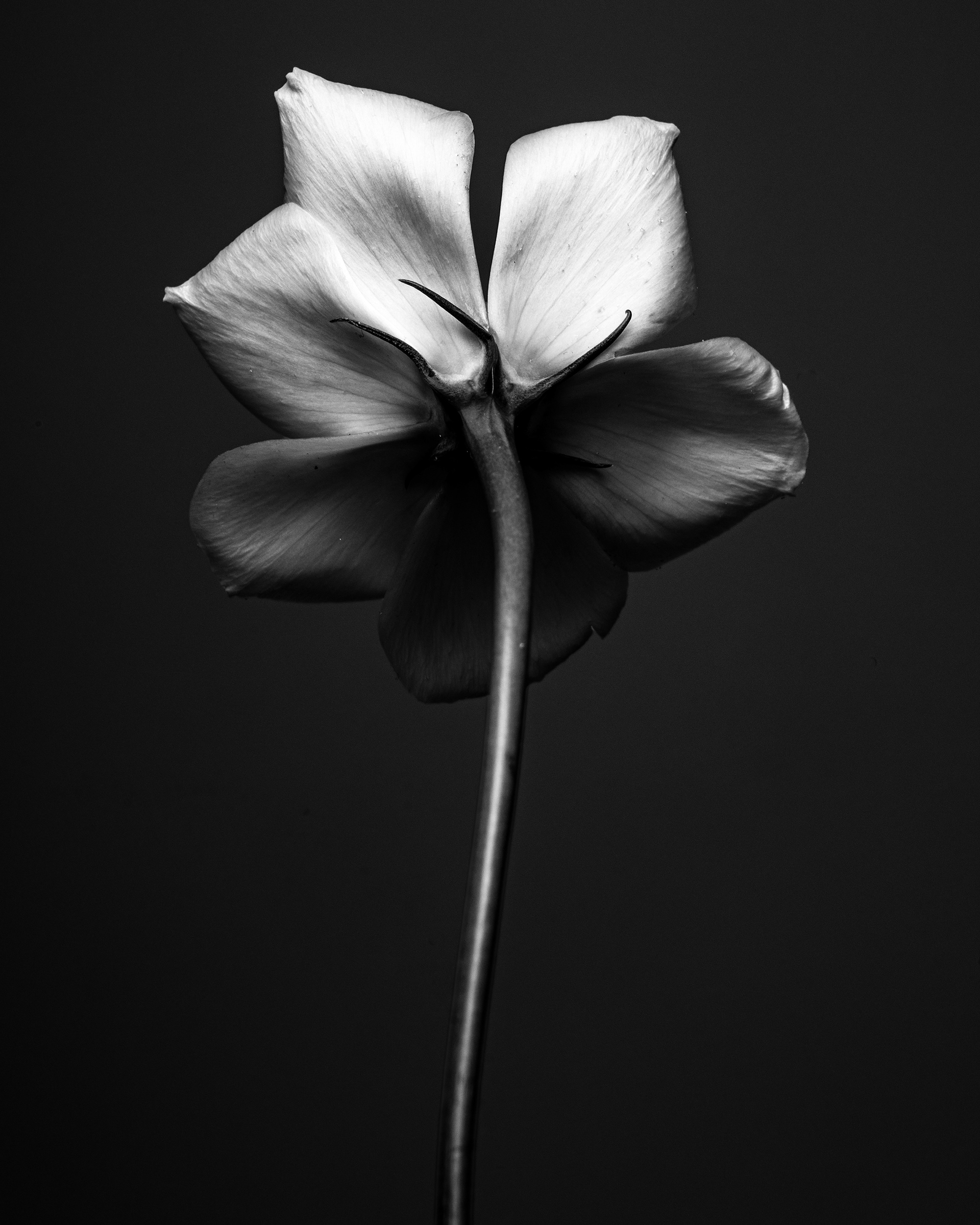
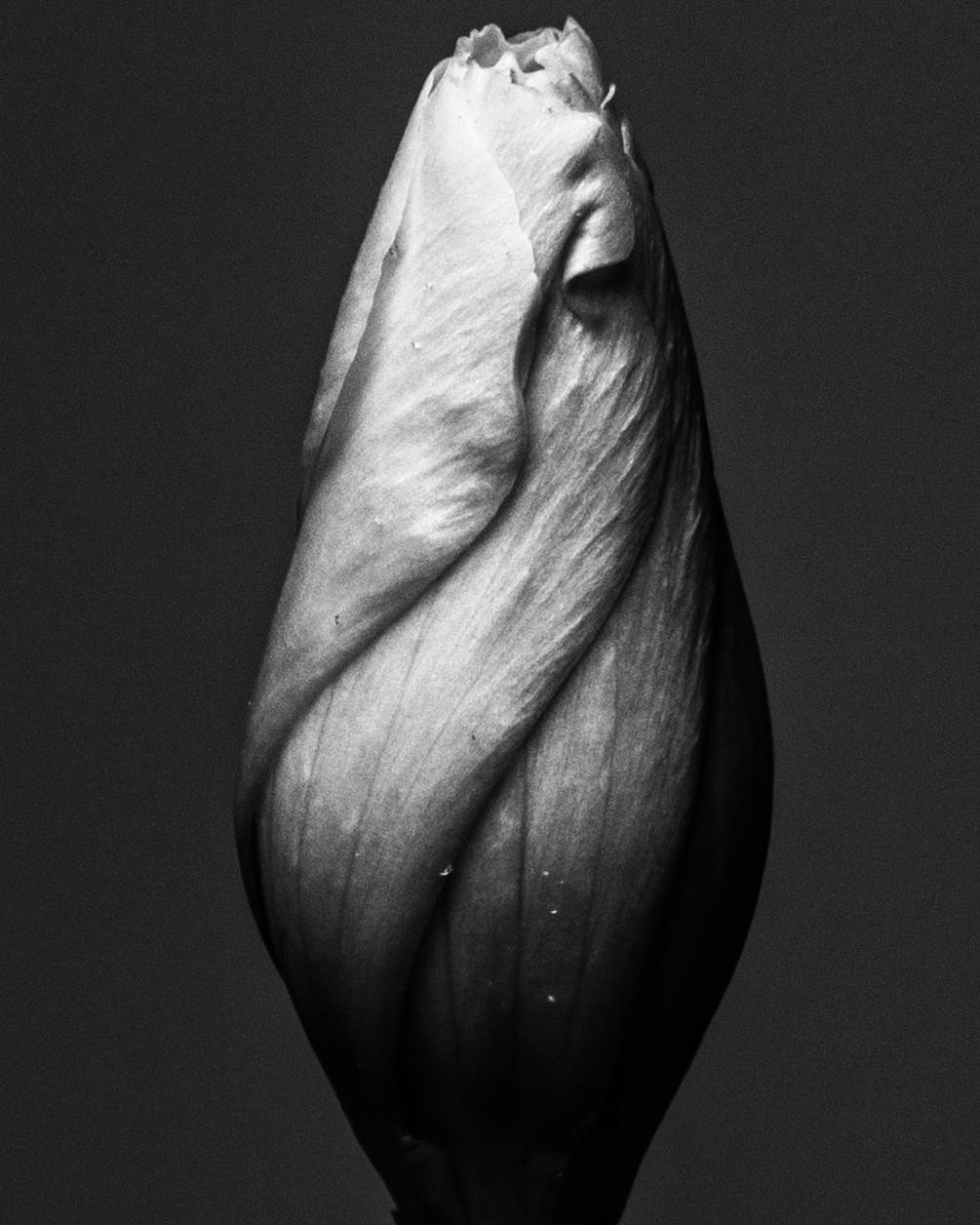
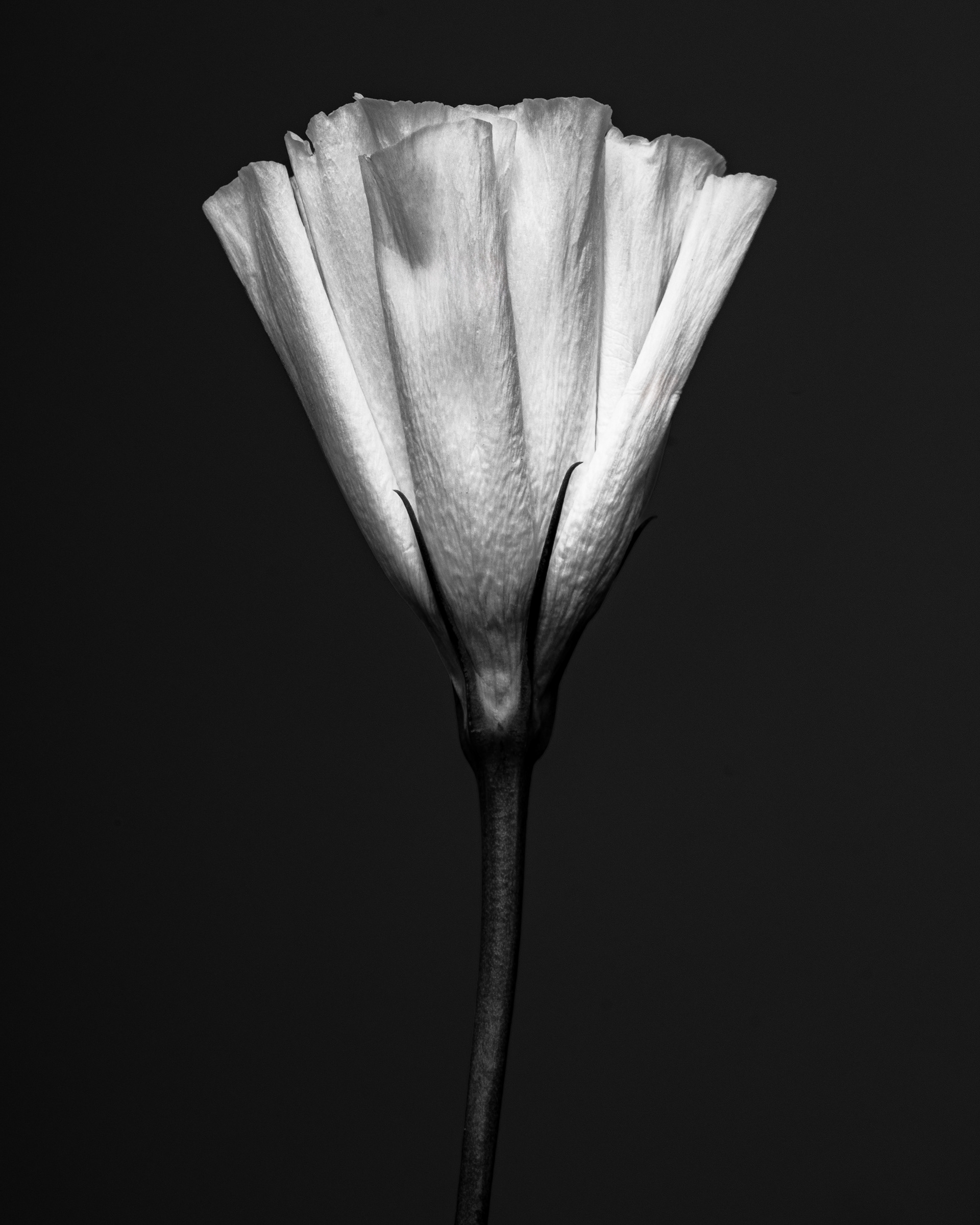
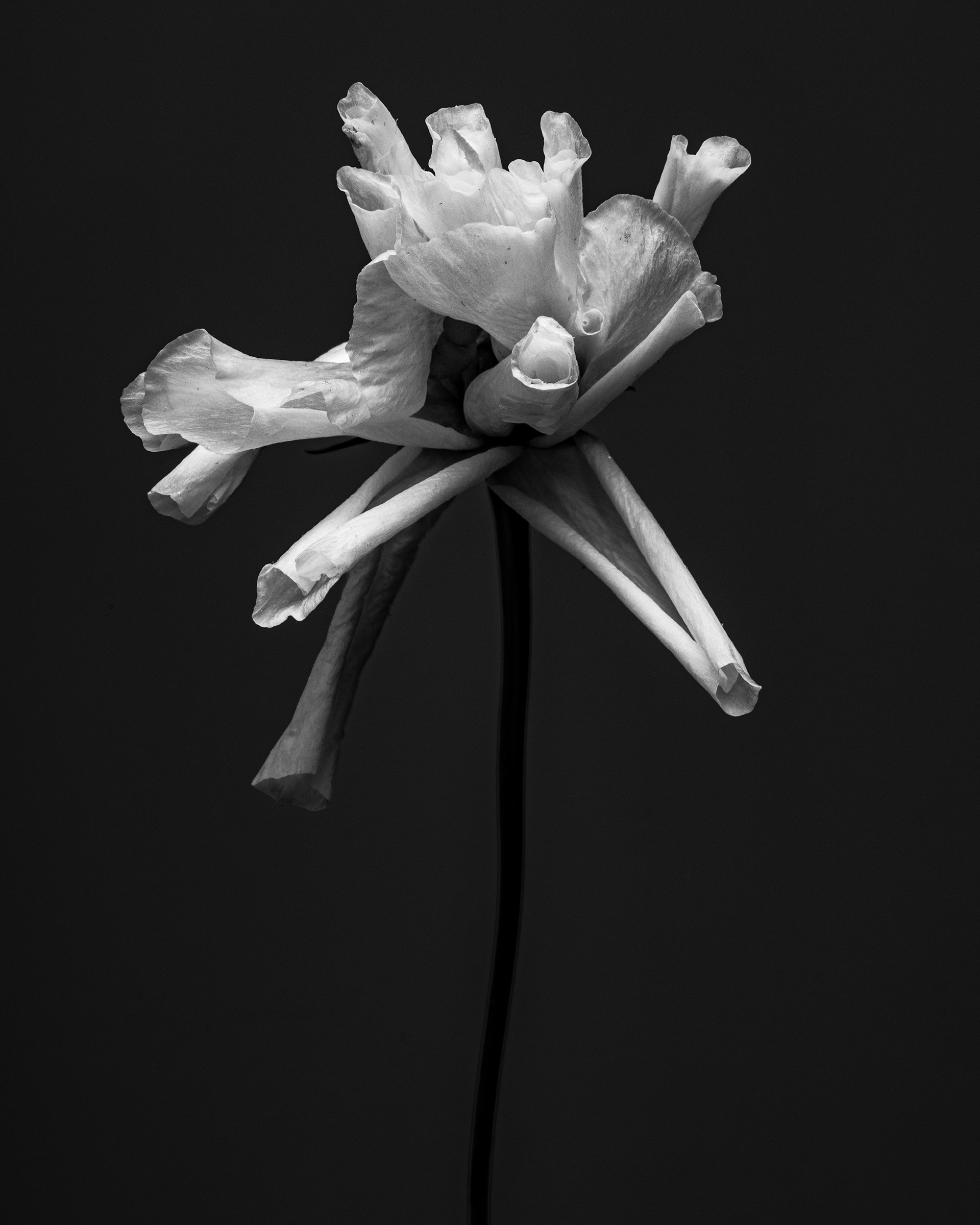
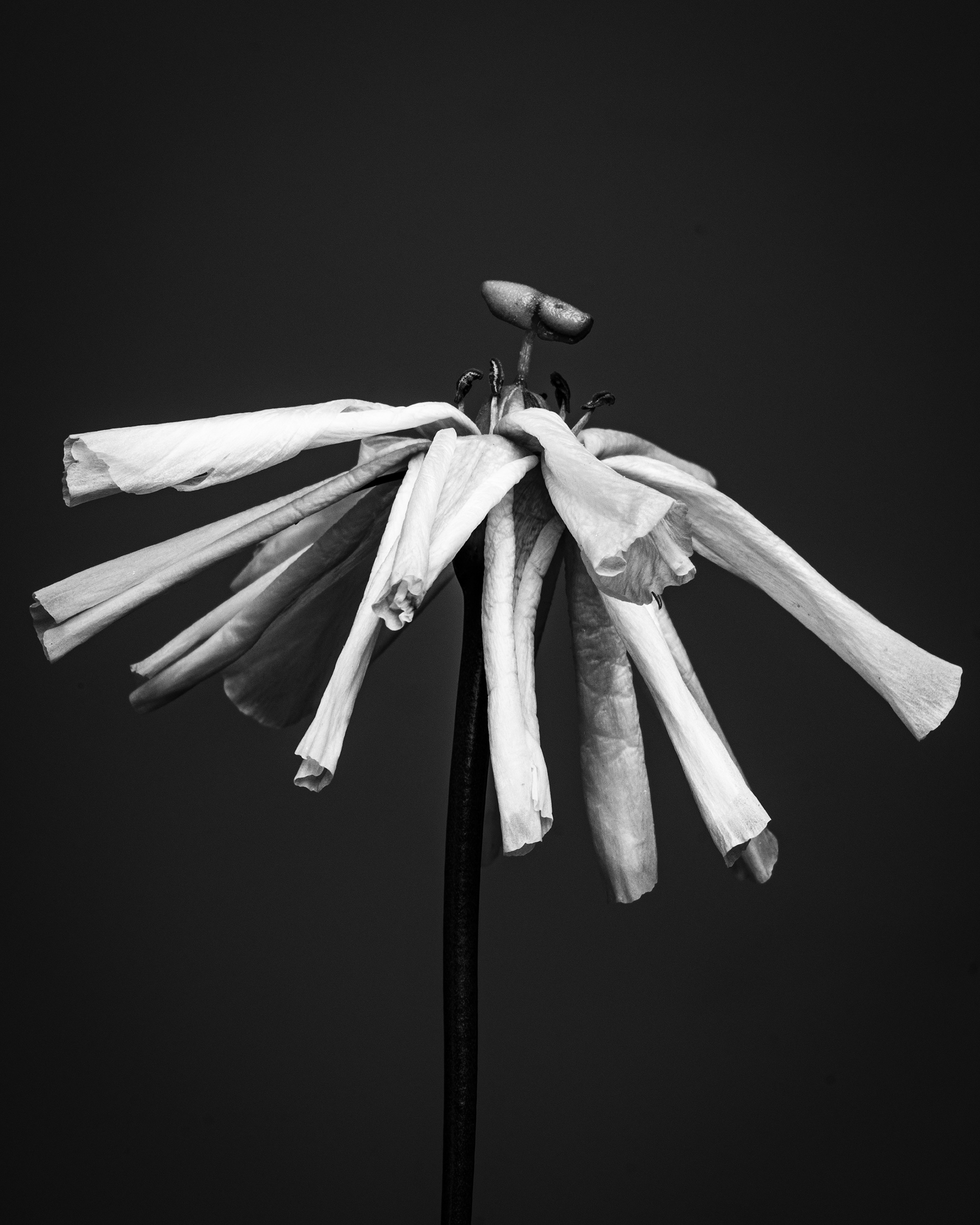
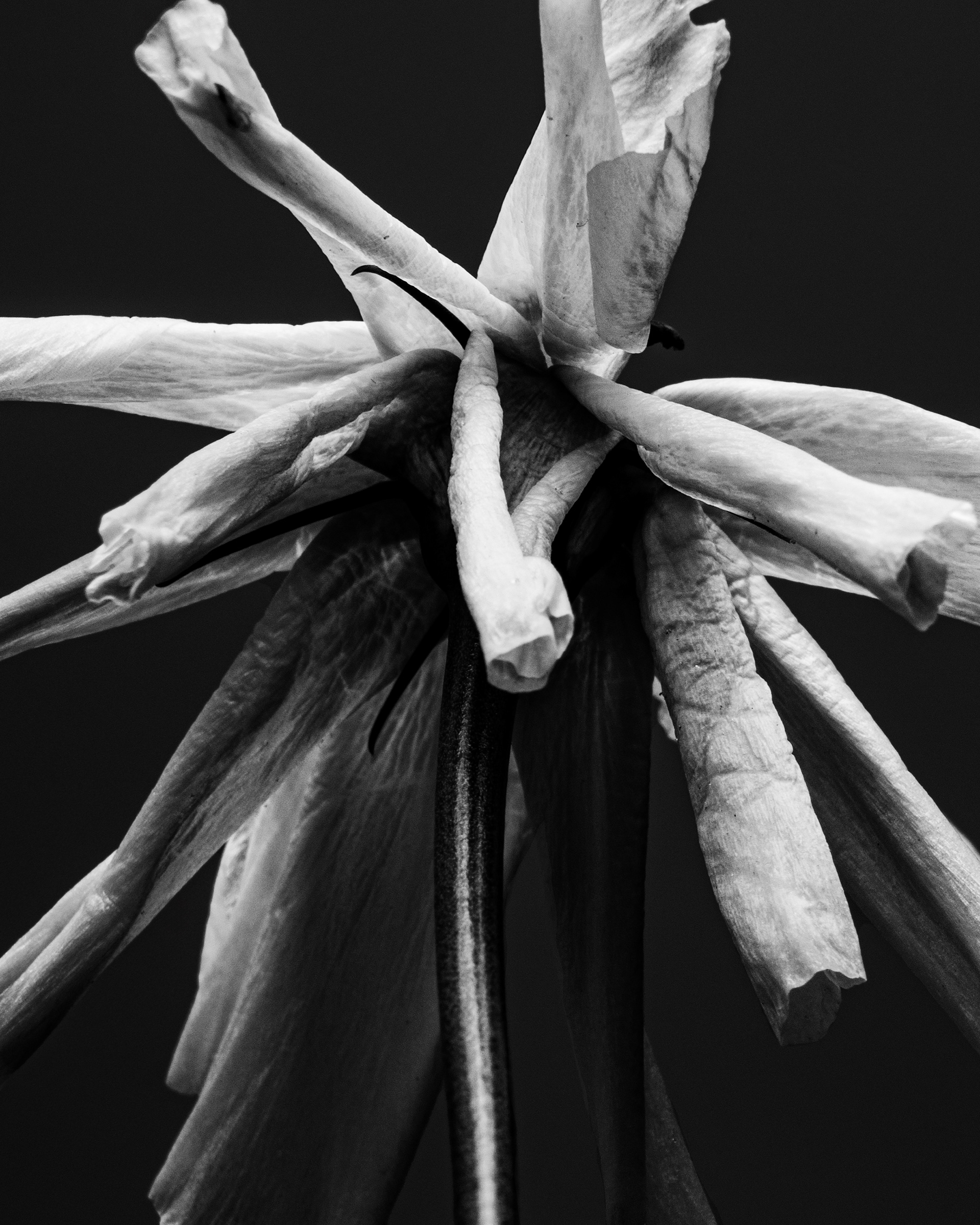
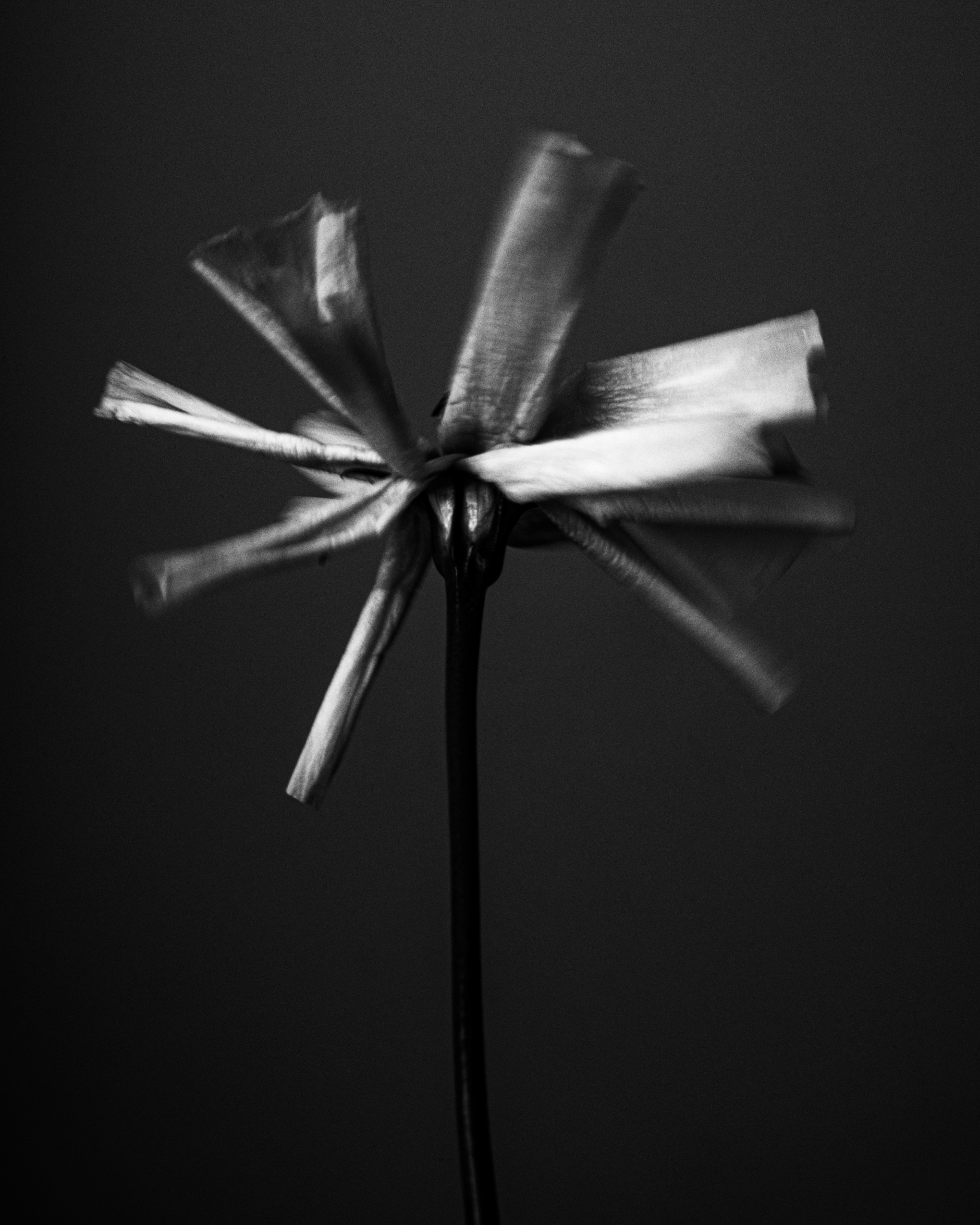
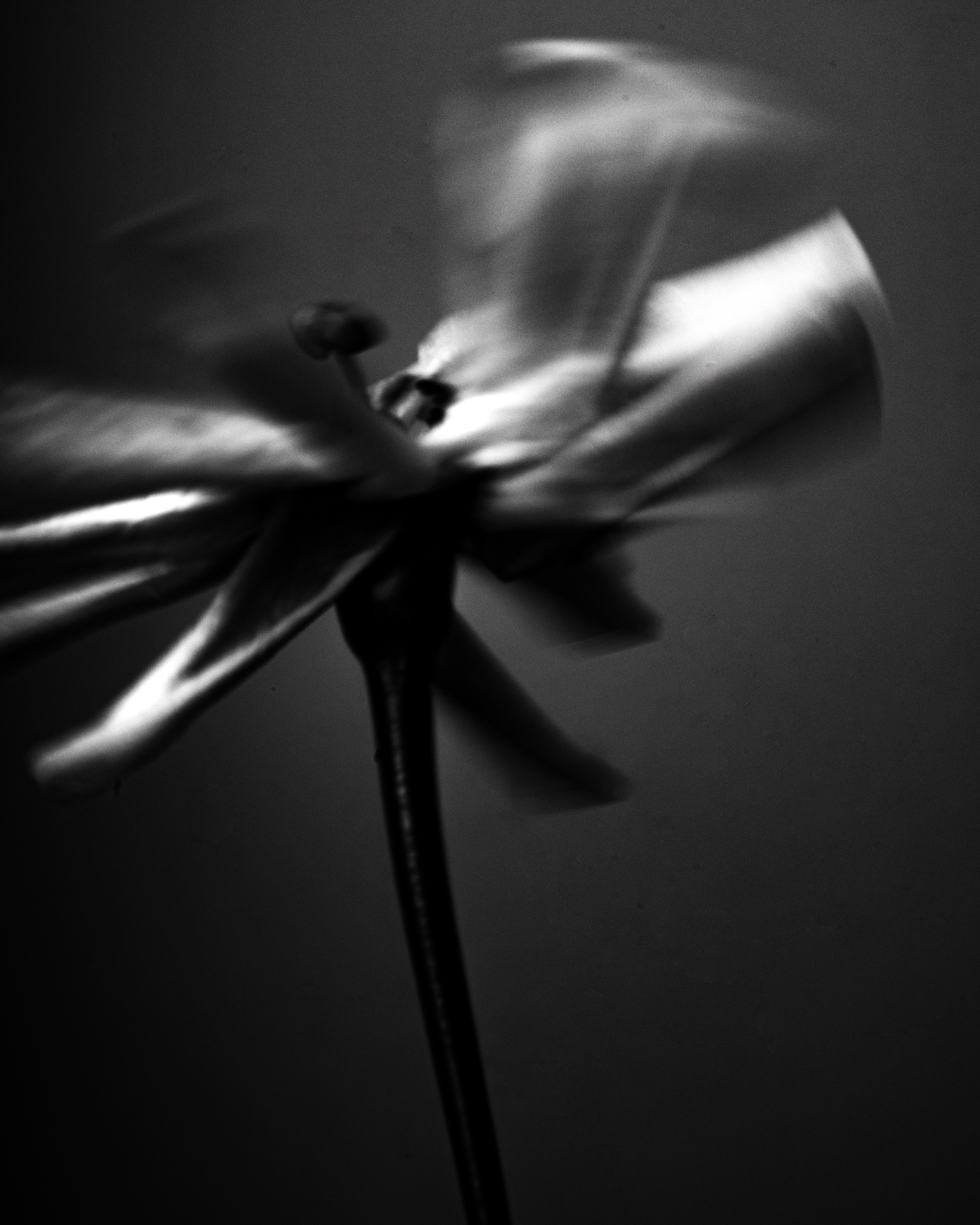
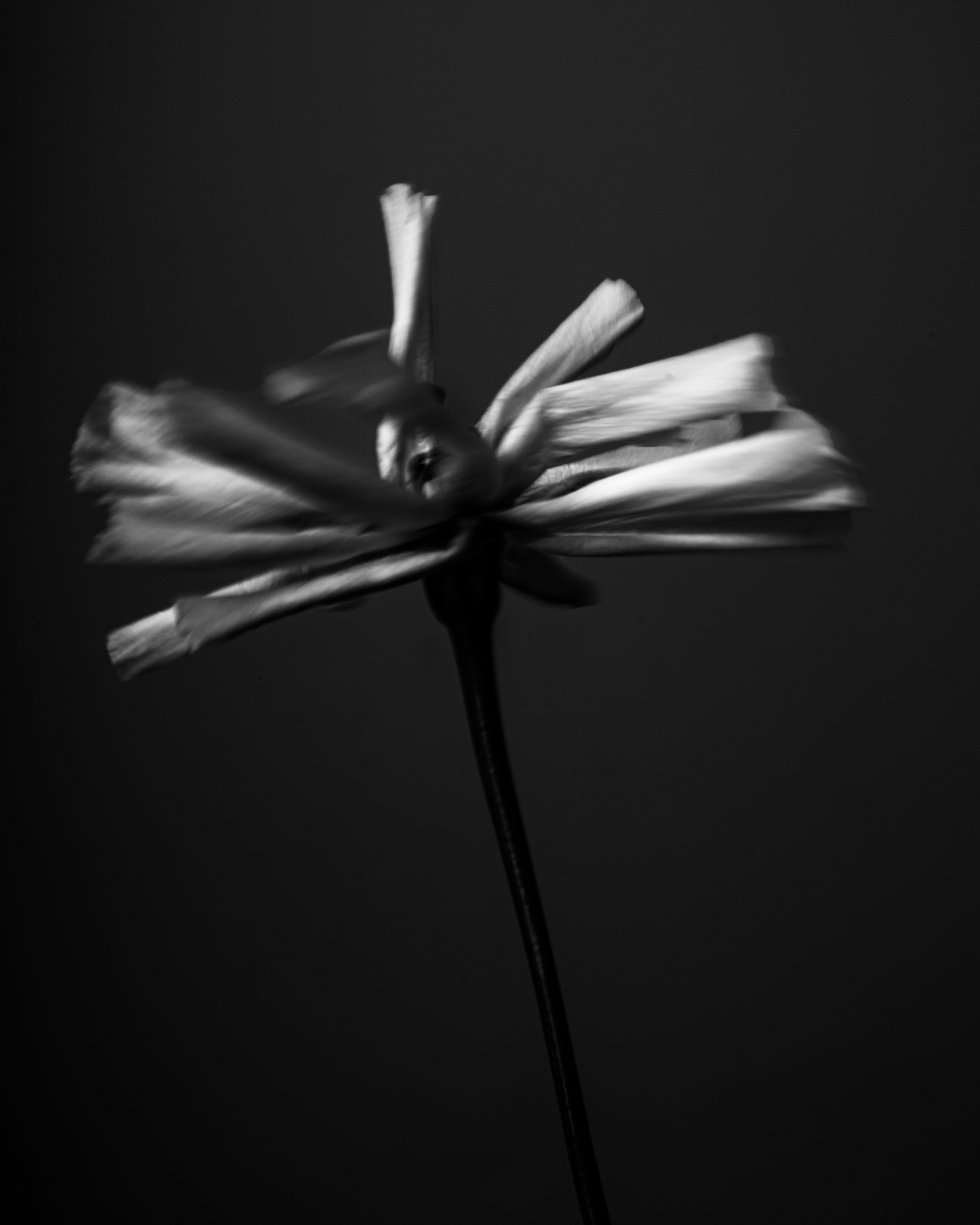
LISIANTHUS (IT) Il termine Lisianthus nasce dall’unione dei vocaboli greci lysis (sciolto, libero, liscio) e anthos (fiore). In questo progetto il fiore diventa metafora della condizione umana: un essere che nasce incatenato alle norme e ai vincoli del proprio tempo, fino a ritrovare la consapevolezza del sé e liberarsi. L’opera si articola in tre momenti: I. La Genesi Le prime sei immagini raccontano la nascita e la crescita dell’essere, il suo primo incontro con il mondo e con le regole che gli vengono imposte, dall’esterno e dalla propria stessa natura. II. Il Teatro Nelle successive sei fotografie, l’essere si apre e si mostra: il desiderio di apparire, di farsi riconoscere dalla società, di far parte. Ma l’apertura è parziale, sempre protettiva, e proprio questo esporsi genera un moto contrario: l’introspezione, la discesa nelle proprie profondità, fino a toccare l’ombra interiore. III. Il Ballo della Morte Nella fase conclusiva, il fiore riconquista il proprio significato originario: libero, sciolto, autentico. È l’istante in cui l’essere muore per rinascere, riconoscendosi nella propria essenza e scegliendo di esistere senza maschere. La libertà, qui, diventa movimento vitale, forza generatrice di sé stesso. Venturoso, Eduardo 2025 LISIANTHUS (PT) A palavra Lisianthus nasce da união dos vocábulos gregos lysis (solto, livre, liso) e anthos (flor). Neste projeto, a flor torna-se metáfora da condição humana: um ser que nasce acorrentado às normas e aos vínculos de seu tempo, até reencontrar a consciência de si e libertar-se. A obra se desenvolve em três atos: I. Gênese As seis primeiras imagens narram o nascimento e o crescimento do ser, seu encontro inicial com o mundo e com as regras que lhe são impostas — tanto de fora quanto de sua própria natureza. II. O Teatro Nas seis fotografias seguintes, o ser se abre e se mostra: o desejo de aparecer, de ser visto e reconhecido pela sociedade, de pertencer. Mas a abertura é parcial, sempre protetora, e é justamente essa exposição que desencadeia um movimento oposto: a introspecção, a descida às próprias profundezas, até o encontro com o seu eu interior. III. O Baile da Morte No ato final, a flor reconquista seu significado originário: livre, solta, autêntica. É o instante em que se morre para renascer, reconhecendo-se em sua essência e escolhendo existir sem máscaras. Aqui, a liberdade se manifesta como movimento vital, força geradora de si mesma. Venturoso, Eduardo LISIANTHUS (ENG) The word Lisianthus comes from the Greek lysis (loosened, free, smooth) and anthos (flower). In this project, the flower becomes a metaphor for the human condition: a being born in chains, bound by the norms and constraints of its time, until it regains self-awareness and sets itself free. The work unfolds in three acts: I. Genesis The first six images narrate the birth and growth of the being, its initial encounter with the world, and with the rules imposed upon it—both from the outside and from its own nature. II. The Theatre In the following six photographs, the being opens and reveals itself: the desire to appear, to be seen and acknowledged by society, to belong. Yet the opening is partial, always protective, and this very exposure triggers a counter-movement: introspection, a descent into one’s depths, down to the encounter with the inner shadow. III. The Dance of Death In the final act, the flower reclaims its original meaning: free, unbound, authentic. It is the moment in which the being dies in order to be reborn, recognizing itself in its essence and choosing to exist without masks. Here, freedom manifests as vital movement, as a force that generates itself. Venturoso, Eduardo 2025